Dune Imperium
Role
UI/UX Designer
Client
Dire Wolf
Timeline
October 2022 - March 2024
Overview
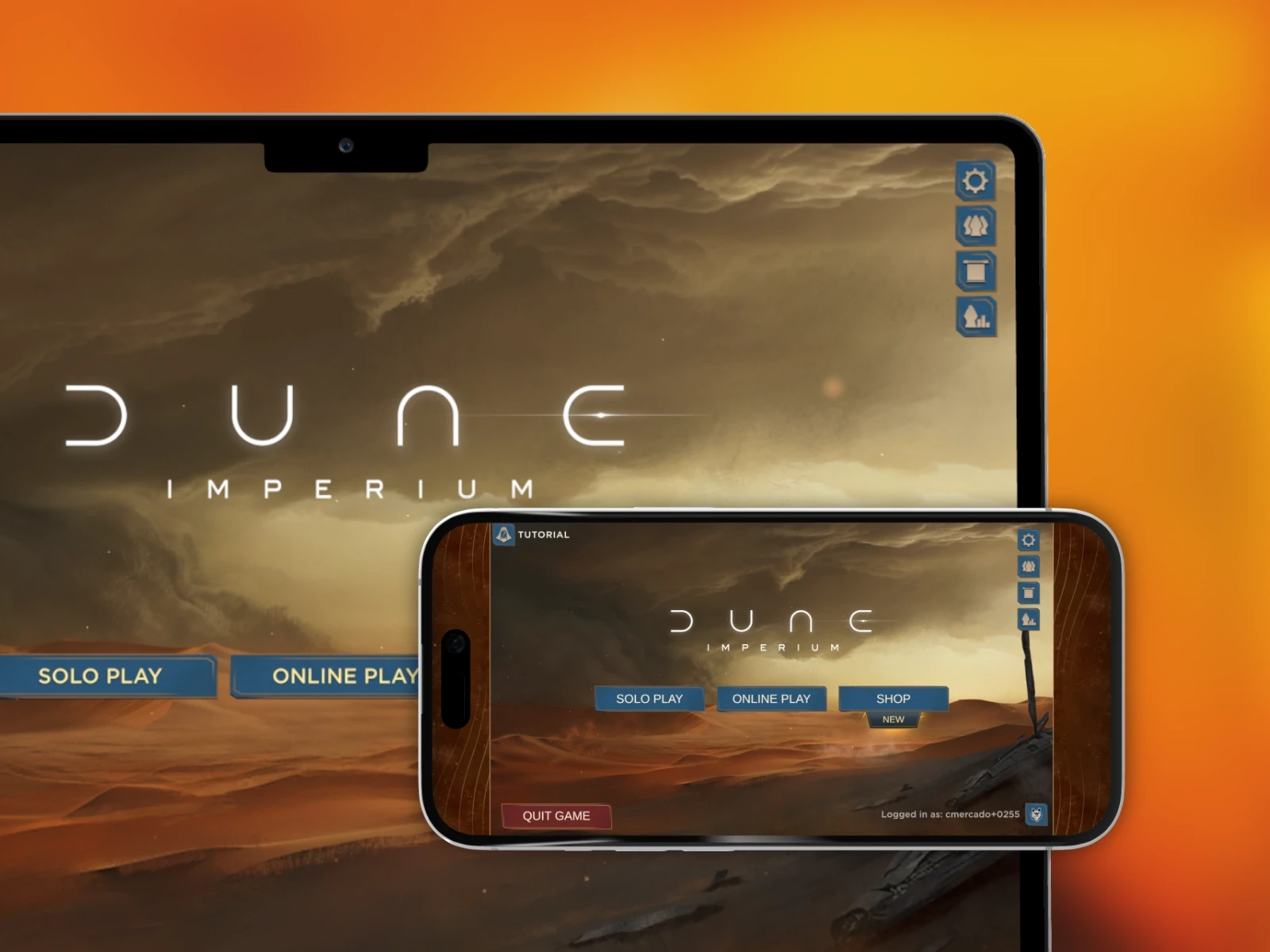
Dune Imperium blends deckbuilding, worker placement, and political intrigue into a dense strategic experience. My role was to translate this multifaceted tabletop game into a desktop and mobile experience that supports quick reference, resource tracking, and card management.
The Problem
Complex Mechanics Require a Clear Interface
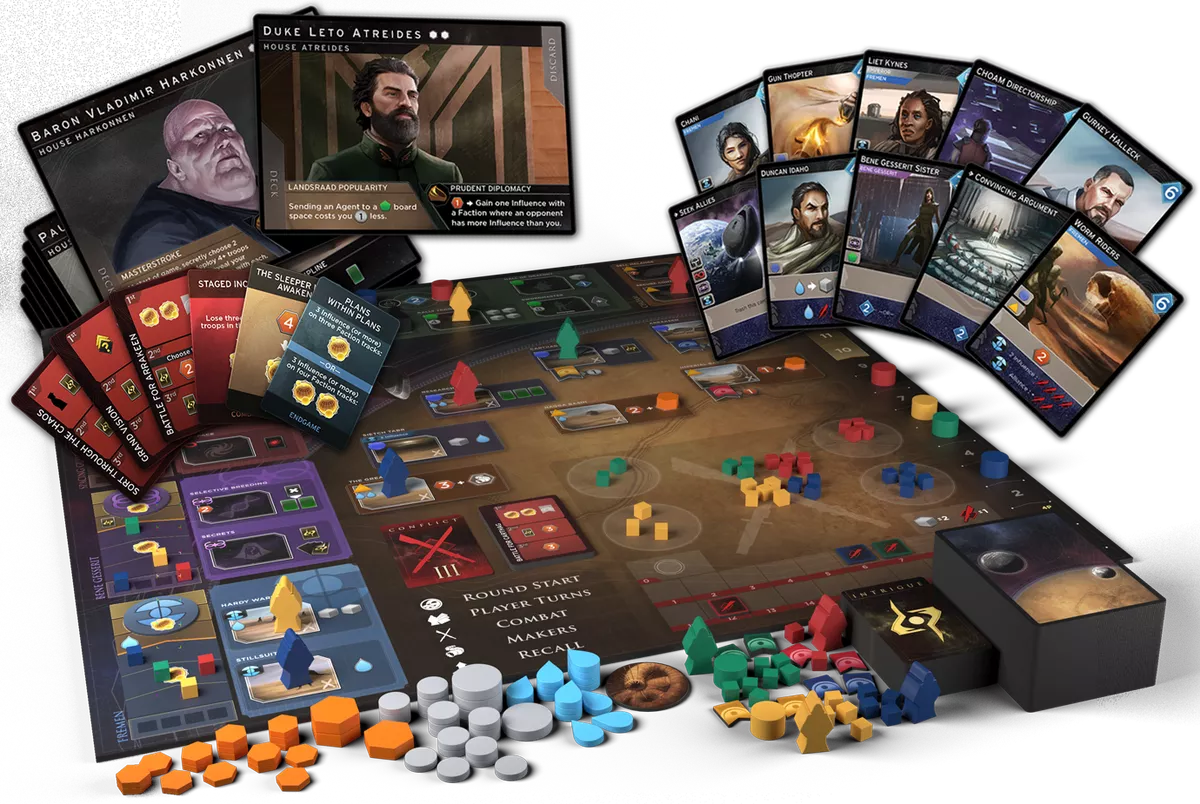
Dune Imperium contains multiple overlapping systems:
Deckbuilding cards with unique icons and multi-phase effects
Worker placement
Conflicts and Strength
Faction influence tracks
Resource management (Solari, Spice, Water)
This complexity makes it difficult for players to:
Keep track of changing board states
Quickly reference multi-step card effects
Understand worker placement choices at a glance
Navigate multiple UI layers in a mobile-sized format
The challenge was to create a condensed, highly legible experience that reduced the cognitive load without flattening the depth of the game.
Process
Understanding Information Hierarchy
I began by mapping out the game’s mechanics and identifying which information players need immediately vs. situationally.
This led to a two-tier structure:
Primary info: resources, imperium row card thumbnails, current conflict details
Secondary info: card effects, discard piles, leader abilities
This framework became the backbone of the layout.
Designing a Multi-System UI for a Mobile Screen
Dune Imperium uses many iconographic cues, so I prioritized:
High-contrast icons for resource readability
Maintaining a strong color identity for the board spaces
Simplified cards down to a thumbnail for quick reference
I created patterns for multi-stage card actions that present effects one step at a time, reducing the sense of “visual noise.”
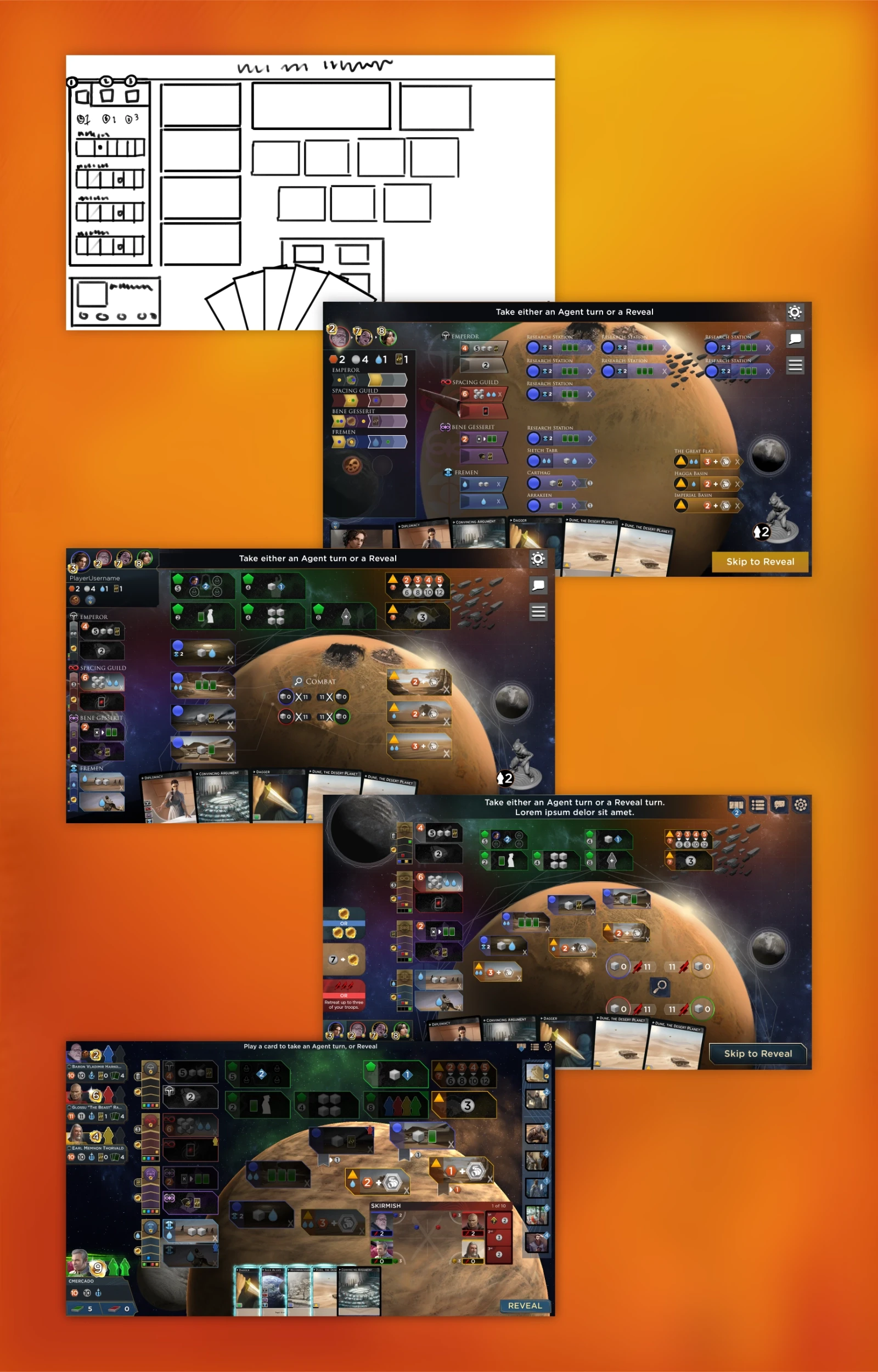
Iterative Testing for Information Density
Multiple prototypes were tested to find the right balance between:
Faithfully representing the original game
Presenting only what players need in each moment
Through iteration, I reduced unnecessary information and utilized clever hinting that allowing users to complete steps faster and with fewer taps.
Result
Simplifying Interaction Without Losing Depth
The final design created a smooth, readable, and fast system that helps players manage an otherwise information-heavy game with confidence. Key improvements included:
A cleaner layout that prioritizes the game’s most important decisions
An intuitive breakdown of complex card effects
A worker-placement interface that can be understood and interacted with top level
Faster turn-to-turn flow thanks to contextual UI states
The result is a digital experience that preserves the strategic tension of Dune Imperium while dramatically reducing mental overhead for players.